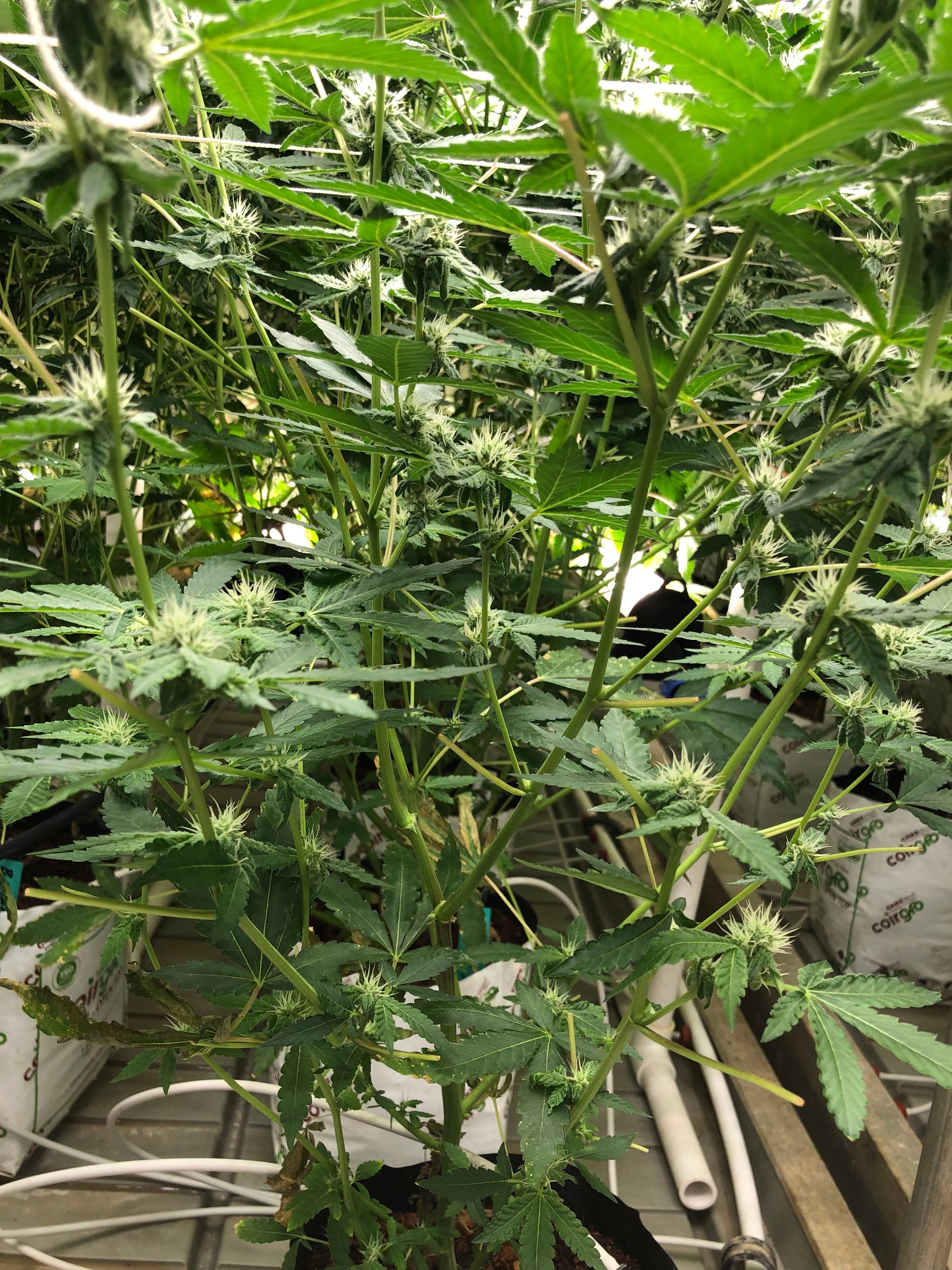

Under canopy grow lights are powerful tools, but they’re easy to misuse. If you skip the fundamentals, it’s possible to spend money on hardware and end up with almost no improvement—sometimes even new problems. Once you understand what under canopy grow lights are, why uplighting from below works, and how to think about intensity and spacing, the next step is avoiding the most common mistakes. This guide walks through the errors growers make most often—and how to fix each one.

Mistake #1: Treating Under Canopy Lights Like Mini Top Lights
The first and most expensive mistake is trying to turn under canopy lighting into a second top-lighting system. In other words, running very high power at the bottom of the canopy and expecting it to carry the crop from below.
Under canopy LEDs are designed as supplemental uplighting, not as primary fixtures. When intensity is pushed too high, you may see:
- Overly warm “ankle-level” air and root-zone stress
- Lower leaves curling or twisting away from the light
- Soil or substrate drying faster than expected near the stem
How to Fix It
- Reduce dimmer settings and treat under canopy as a gentle fill, not a blast.
- Check lower-canopy temperature and leaf posture 30–60 minutes after changes.
- Use your top lights as the main driver; let under canopy LEDs support shaded zones only.
If you want to see how modern top fixtures can carry most of the load while under canopy focuses on the shadows, review a high-output rack light such as Griffin Advanced Grow Light and imagine your under canopy LEDs as the supporting layer beneath it.
Mistake #2: Using the Wrong Direction or Position
Another common issue is installing under canopy fixtures in the right vertical zone but pointing them in the wrong direction. True under canopy lighting means uplighting—light traveling from below into the plant structure—not side lighting or floor lighting.
If bars are aimed sideways or down at the floor, you’ll see:
- Bright streaks between plants but dark undersides of leaves
- Hotspots on walkways instead of in the lower canopy
- Minimal change in lower bud development, even though power draw increased
How to Fix It
- Mount fixtures low, but make sure the primary beam is angled upward into foliage.
- Stand at plant height and visually confirm that the underside of leaves is illuminated.
- Avoid pointing fixtures directly at reflective floor surfaces or bench hardware.
For a refresher on why direction matters so much, go back to Why Uplighting From Below Works and make sure your physical installation matches the concept.
Mistake #3: Spacing Bars Too Far Apart
Even when intensity and direction are both correct, spacing often isn’t. Widely spaced bars create a pattern of bright “light tunnels” with dark gaps in between. Plants directly above a bar may perform well, while those between bars lag behind.
You can usually spot this problem by stepping back and looking across benches or racks:
- Distinct bright stripes directly over each bar
- Noticeably darker strips between them
- Lower buds in dark zones that do not match the rest of the room
How to Fix It
- Reduce spacing so light fields overlap; think of creating a continuous glow, not isolated beams.
- Match bar length to bench or rack length wherever possible.
- Use the intensity and spacing guidance from How Much Is Enough? as a reference and adjust from there.
If you’re planning a new layout, browsing the different bar lengths inside the under canopy product collection will help you visualize how to minimize gaps before hardware ever arrives.
Mistake #4: Ignoring Spectrum Strategy in the Lower Canopy
Under canopy lights don’t have to duplicate your top-light spectrum. In many cases, using targeted spectrum at the bottom of the canopy is more effective. Growers sometimes default to whatever spectrum is cheap or available, leading to:
- Red-only bars that push stretch in the wrong phase
- Heavy blue content where it’s not needed
- Inconsistent responses between different rooms or runs
How to Fix It
- Decide what you want lower-canopy light to do: support flowering, enhance color, or simply keep sites active.
- Choose spectra aligned with that goal—such as far-red support or balanced white with a mild red emphasis.
- Stay consistent run to run so you can attribute changes to spectrum, not random variation.
For a deeper look at one common strategy, revisit Under Canopy Lights: Enhancing Yield With Far-Red Spectrum and consider how that fits into your own genetics and market requirements.
Mistake #5: Forgetting About Wiring, Access, and Maintenance
A lighting system that performs well on day one but is difficult to maintain will slowly drift out of spec. Some under canopy installs make it hard to:
- Move or service rolling benches
- Clean under bars and around irrigation hardware
- Replace a single bar without disrupting the rest of the row
These issues don’t show up on a light map, but they do show up in labor and downtime.
How to Fix It
- Plan cable routing and connector placement before mounting the first bar.
- Leave enough slack and service loops so benches can still move safely.
- Standardize connection hardware and label runs so individual bars can be swapped quickly.
If you are already working under utility programs or rebates, document your final layout and connections. Clear documentation makes it easier to show that fixtures are installed as specified when you’re working with energy-efficiency partners like Grow Lights Rebate.
Mistake #6: Running Under Canopy Lights on the Wrong Schedule
Even a well-designed under canopy layout can underperform if it runs at the wrong times. Common scheduling errors include:
- Running under canopy bars at full power for the entire photoperiod, even when they aren’t needed
- Turning them on too early in veg, before the canopy has developed enough to justify supplemental light
- Forgetting to coordinate dimming curves with the top lighting schedule
How to Fix It
- Focus under canopy use on stages when shading is strongest—usually mid to late flower.
- Pair under canopy operation with your top light dimming schedule to keep the room feeling balanced.
- Test shorter operating windows and compare yield and quality against full-period use; often, you’ll find a sweet spot that balances crop response and energy cost.
Mistake #7: Not Measuring Results Beyond “Looks Brighter”
The last mistake is subtle but important: judging success only by how the room looks, instead of what the harvest reports say. It’s easy to turn on under canopy lights, see a brighter lower canopy, and assume it’s working perfectly.
In reality, you should be tracking:
- Percentage of buds grading into your top category before and after under canopy installation
- Yield distribution along the plant (top, mid, lower)
- Trim time and how much material ends up as low-grade or extraction-only biomass
How to Fix It
- Set up at least one small A/B test when you introduce under canopy lighting.
- Record both visual observations and harvest metrics.
- Adjust intensity, spacing, and scheduling incrementally rather than changing everything at once.
Turning Mistakes Into a Better Under Canopy Strategy
Under canopy grow lights work best when they’re treated as a precise tool, not just “more light.” Avoid blasting the lower canopy, point fixtures upward into the plant instead of at the floor, close up spacing so coverage overlaps, and match spectrum and scheduling to the job you want the lower canopy to do.
If you’re just starting with under canopy LEDs, anchor your plan with the fundamentals in What Are Under Canopy Grow Lights?, then refine direction and concept with Why Uplighting From Below Works and How Much Is Enough?. From there, use the mistakes in this article as a checklist—not to avoid under canopy lighting, but to tune it into one of the most efficient upgrades in your entire lighting strategy.