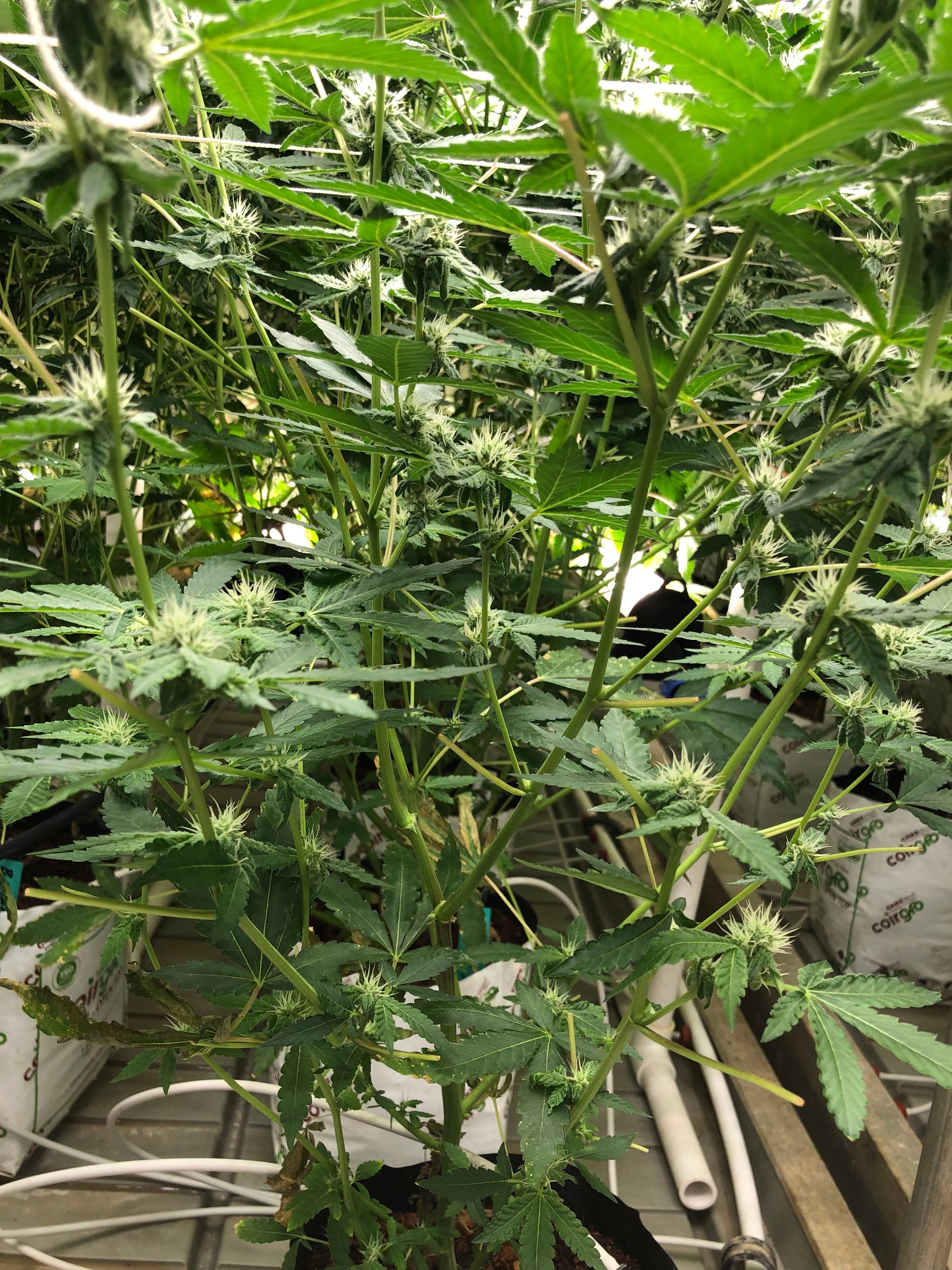

Under canopy grow lights aren’t just “lights placed lower.” The defining concept is uplighting—a bottom-up lighting strategy that pushes photons into the shaded zones your top lights can’t consistently reach. If you’re brand new to the topic, start with the foundational guide first: What Are Under Canopy Grow Lights?. This article focuses on the mechanism—why uplighting works and how it complements top-down LED grow lighting in dense indoor canopies.
What “Uplighting” Means in Under Canopy Lighting
In commercial grow rooms, “under canopy” often gets confused with mid-canopy side lighting or inter-canopy systems. True under canopy uplighting is simpler:
- Light source is below the canopy (at or below bench level, under lower growth zones).
- Primary light direction is upward (photons travel bottom-to-top into the plant structure).
- Target is the shaded lower canopy (lower leaf surfaces and lower bud sites).
When you do it correctly, uplighting doesn’t “replace” top lights—it fills in what top lights systematically miss. For reference product context (not required, just illustrative), you can look at a typical under-canopy bar format here: 4ft Full Spectrum Under Canopy Grow Light.
Why Top-Down Lighting Leaves Yield on the Table
Even with high-performance LED top lights, indoor canopies create their own optical problem: upper leaves intercept a disproportionate amount of the photon flux. Once the canopy closes, light penetration becomes limited by structure—not by fixture power.
That’s why many rooms end up with:
- Strong top flowers and weaker lower flowers
- More “larf” or airy lower buds
- Greater variability between plants, rows, or benches
- Lost production potential in the lower third of the canopy
Uplighting aims at the specific zone that top lights struggle to serve—under the leaf layer and into the lower bud sites. Think of it as “rebalancing” the canopy’s usable light distribution rather than increasing total wattage overhead.
How Light Interacts With Leaves in the Lower Canopy
Leaves aren’t flat solar panels in a vacuum—they’re layered, angled, and shaded in a 3D structure. In the lower canopy, photons arrive late (if they arrive at all), and the intensity can sit near (or below) the level where photosynthesis meaningfully contributes to growth.
Uplighting helps in two practical ways:
- It increases photon availability in the shaded zone, making lower leaves and bud sites more metabolically active.
- It changes the angle of incidence, sending light from below and reducing reliance on difficult top-down penetration.
You don’t need a “perfect” optical model to benefit. In real rooms, the result is straightforward: lower sites receive more usable light over the photoperiod, which supports more uniform development.
Why Uplighting Can Improve Uniformity
Uniformity is where under canopy grow lights often pay back first. Many growers focus on peak PPFD at the top canopy, but the harvest value is influenced by how much of the plant produces “A-grade” flower versus lower-grade material.
When lower sites remain too shaded, the plant prioritizes the top. That creates a familiar pattern:
- Large delta between top colas and lowers
- More trimming waste and sorting
- Greater variability within a room
Uplighting reduces the disparity. Instead of leaving the bottom third underpowered, you give it a consistent supplemental photon stream. The goal isn’t to make the bottom as intense as the top—just to keep it productive enough to raise the “floor” of quality.
Uplighting Does Not Mean “Blast the Bottom”
A common misconception is that under canopy lighting should be extremely intense. In practice, under canopy systems are most effective when:
- They are consistent and evenly distributed
- They avoid excessive hot spots close to the bar
- They complement the room’s overall lighting plan
Under canopy uplighting is supplemental by design. It’s the difference between “filling gaps” and “competing with your top lights.” If you’re selecting fixtures, start by reviewing your available configurations and lengths here: All Under Canopy Products.
Spectrum: Why Under Canopy Often Uses Targeted Channels
Under canopy systems commonly come in spectrum options that differ from your top light’s broad output. The reason is practical: the lower canopy has a different job than the upper canopy. Your top lighting drives primary biomass and flowering energy across the plant. Under canopy lighting supports underlit zones and can be tuned to push specific outcomes in those zones.
For example, many growers explore far-red strategies under canopy to influence flowering behavior and canopy responses. If you want a dedicated far-red discussion, you can reference: Under Canopy Lights: Enhancing Yield With Far-Red Spectrum.
The takeaway: spectrum choice matters, but the foundational win typically comes from direction + distribution first. Dial in the geometry (uplighting and coverage), then refine spectrum.
Placement: The Simplest “Correct” Setup
For a pure uplighting concept, keep it simple:
- Mount bars low enough to shine upward into shaded zones
- Keep spacing consistent across the bench/row
- Avoid blocked paths (don’t aim light into solid bench framing)
- Prioritize even coverage over extreme intensity
If your room uses rolling benches or tight racking, uplighting is often easier to integrate than adding more top fixtures, because you’re using underutilized vertical space and targeting a specific canopy region.
Uplighting + Top Lighting: How They Work Together
Think of your lighting plan as a layered system:
- Top lights set the primary growth engine (main PPFD, main DLI, main uniformity at canopy top)
- Under canopy uplighting reduces the penalty of canopy shading (more usable production below)
When you do this well, you often see improvements that show up in operations—not just plant photos:
- Less extreme “top-heavy” harvest profile
- Reduced sorting and waste
- More consistent outcomes across benches
- Cleaner path to predictable crop planning
Energy and Rebate Considerations
Because under canopy systems are supplemental, many growers evaluate them through ROI: how much usable yield and quality improvement do you get per added watt? In many regions, under canopy lighting can also intersect with energy-efficiency incentive programs. If rebates are part of your purchasing plan, start here: Utility Energy Rebates Guide.
The best approach is to treat under canopy as an efficiency tool: you’re improving how much of the plant becomes sellable product rather than simply increasing total lighting power.
Quick Summary: Why Uplighting From Below Works
- Canopy shading is structural—top power alone can’t fix geometry.
- Uplighting targets the underlit zone where top-down photons are scarce.
- Better lower-canopy light can improve uniformity and usable yield.
- Direction matters—under canopy means bottom-up, not sideways or down.
- Start with coverage, then refine spectrum and strategy.
In practice, the best way to validate under canopy uplighting is to start simple: choose one room, one bench, or one zone, and run a controlled comparison. Track not only total yield, but also how much of that yield grades into your top product category and how much time your team spends trimming and sorting. If the lower canopy is clearly more productive and consistent, you will feel the impact in real harvest numbers—not just in PPFD charts.
From there, you can decide whether to expand under canopy lighting across additional rooms or phases. To review practical fixture options, start with our under canopy grow light collection. If rebates or incentive programs are part of your decision, you can also explore structured guidance on qualifying fixtures and savings at Grow Lights Rebate. Thoughtful uplighting, paired with an efficient top-lighting design, gives you a more complete lighting strategy for modern indoor cultivation.