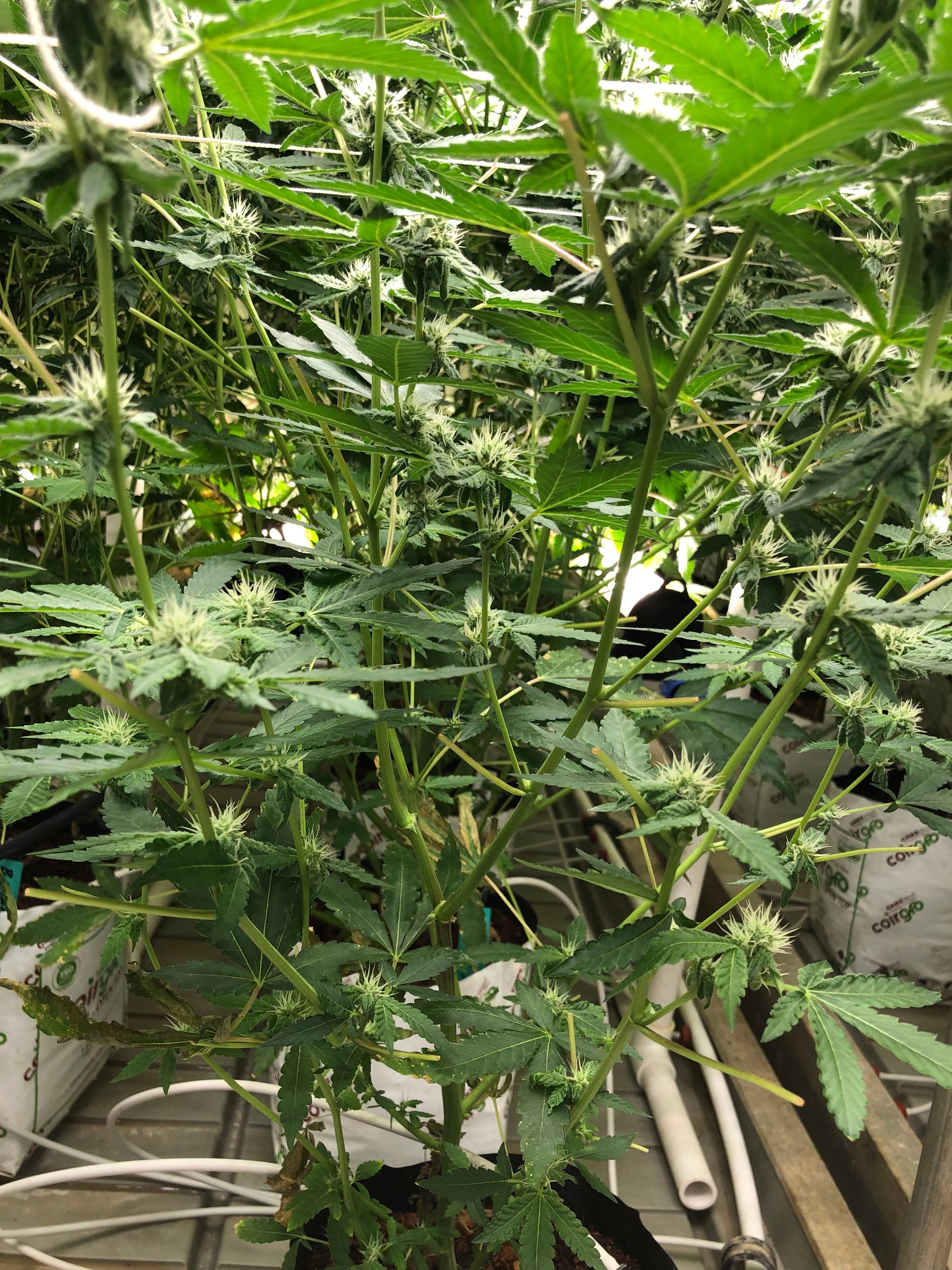

Under canopy grow lights become even more valuable when your facility uses rolling benches or multi-tier racks. These systems increase plant density and efficiency—but they also increase shading, create tighter service lanes, and leave less margin for “trial and error” lighting layouts.
If you’re building your under canopy strategy from scratch, start with these three foundations: What Are Under Canopy Grow Lights?, Why Uplighting From Below Works, and How Much Is Enough?. This post focuses on layout: how to place, route, and maintain under canopy lighting when benches move and racks stack.
Why Rolling Benches and Racks Need a Different Plan
In a stationary room with wide aisles, you can sometimes “get away” with imperfect spacing and wiring. Rolling benches and racks are less forgiving. Common challenges include:
- More shading: higher plant density creates deeper, darker lower canopies.
- Movement: benches shift, so cable routing must flex safely.
- Tighter maintenance windows: you need quick access for cleaning and replacement.
- More hardware conflicts: irrigation lines, drain lines, bench framing, and rack cross-members compete for the same space.
The goal is a layout that is productive and operationally clean—so your under canopy system stays “in spec” for the long run.

Rolling Bench Layout: The Three Rules That Prevent Most Problems
Rule 1: Align Bars With Plant Rows, Not Aisles
On rolling benches, it’s common to accidentally mount bars where they’re easiest—along bench edges or structural rails—rather than where the plants actually sit. The result is bright light in the wrong place and dark spots under the canopy.
Instead, map your plant rows first, then place bars so light rises into the lower canopy beneath the productive plant zone.
Rule 2: Make Light Fields Overlap to Avoid Striping
Benches often encourage long, linear installations—good. But if bars are spaced too far apart, you’ll get strong “columns” over each bar and weak zones between them. Striping shows up as inconsistent lower buds across the same bench.
If you want a practical reference for bar formats and lengths, browse the under canopy grow light collection and choose lengths that help you run cleaner, more continuous lines down the bench.
Rule 3: Plan Movement First, Then Wiring
Rolling benches create one non-negotiable constraint: cables must move safely. Systems that look neat on day one can fail once benches begin shifting daily.
A good bench install includes:
- Service loops (controlled slack) so movement doesn’t pull connectors
- Strain relief at connection points
- Consistent routing paths that do not cross moving pinch points
Multi-Tier Racks: What Changes When You Stack Layers
With multi-tier racks, you’re managing two kinds of shading:
- Within each tier: plant canopy shading inside the level
- Between tiers: structural and fixture shadowing from the level above
That’s why rack systems often benefit from a more “modular” under canopy approach—consistent patterns that repeat across tiers so maintenance stays simple.
Keep Each Tier’s Under Canopy System Repeatable
The best rack installations follow a repeatable template:
- Same bar spacing on each tier
- Same cable routing pattern
- Same connector locations
- Same access clearances
Repeatability reduces downtime and makes it easy to isolate issues. If Tier 2 looks different from Tier 3, troubleshooting becomes guesswork.
Spacing and Coverage on Benches: A Practical Decision Framework
Instead of trying to engineer a perfect lighting grid, use a simple framework:
- Step 1: Decide the “target zone” (lower third of canopy / lower bud sites).
- Step 2: Place bars so light rises into that zone without hitting bench framing or walkways.
- Step 3: Reduce spacing until you see a connected glow rather than isolated beams.
- Step 4: Use dimming and scheduling to tune final intensity.
If you want a deeper reference on “enough” without a complex PPFD obsession, use: How Much Is Enough?.
Common Conflicts: Irrigation Lines, Drainage, and Airflow
Most bench and rack problems aren’t caused by light—they’re caused by everything that competes with the light.
Irrigation and Drainage
- Don’t mount bars where drippers or drainage lines will constantly drip onto connectors.
- Keep a clear service path so a clogged emitter doesn’t require removing a light bar to reach it.
- Route cables away from standing water zones.
Airflow and Sanitation
- Ensure under canopy bars don’t block airflow under benches.
- Plan cleaning access. If you can’t wipe it, it will slowly become less effective.
- Use consistent mounting heights so sanitation crews don’t “fix” your layout accidentally.
Scheduling Strategy for Benches and Racks
Benches and racks often run different growth stages in adjacent zones. That makes scheduling important. Consider:
- Stage-based use: run under canopy lighting primarily mid-to-late flower where shading is worst.
- Zone-based use: benches in late flower may need more under canopy support than benches in early flower.
- Consistency first: change one variable at a time (intensity, spacing, or schedule), not all three.
When you improve usable yield per kWh and reduce waste, under canopy lighting can pair well with energy efficiency planning. If you’re making purchasing decisions around incentives, start with guidance at Grow Lights Rebate and align your final installation with the documentation you’ll need later.
How to Test and Scale Without Disrupting Operations
For moving benches and stacked racks, the safest rollout is staged:
- Prototype one bench or one tier using your intended mounting, spacing, and routing.
- Run one full cycle and compare grade-out and lower canopy development.
- Standardize a template (measurements, cable routes, mounting points).
- Scale with repeatability rather than improvising each bench.
This approach avoids the most common failure mode: a room full of slightly different installs that are hard to maintain and impossible to troubleshoot.
Recommended Hardware Mindset: Top Lights Do the Heavy Lifting
Rolling bench and rack systems still rely on strong, efficient top lighting as the primary driver. Under canopy LEDs should be designed as the supporting layer. If you want a reference point for high-performance top lighting that pairs well with under canopy strategies, see: Griffin Advanced Grow Light.
The “best” system is not the one with the most fixtures—it’s the one where every fixture has a clear job and a clean path to maintenance.
Quick Checklist Before You Install Under Canopy Lights on Benches or Racks
- Have you mapped plant rows and canopy zones first?
- Will bars shine upward into foliage (not into framing or floors)?
- Is spacing tight enough to avoid striping?
- Can benches move without pulling connectors?
- Do you have service loops and strain relief?
- Can irrigation/drainage be serviced without removing lights?
- Is the install repeatable across benches/tiers?
- Do you have a small A/B test plan before scaling?
Final Thoughts
Designing under canopy lighting for rolling benches and multi-tier racks is less about “more light” and more about layout discipline. When direction, spacing, routing, and maintenance access are planned upfront, under canopy grow lights become one of the cleanest ways to improve lower canopy productivity and harvest uniformity.
To keep your topic cluster strong, make sure this post links back to your fundamentals: What Are Under Canopy Grow Lights? and Why Uplighting From Below Works. Then use your product and planning page as the action step: All Under Canopy Products.