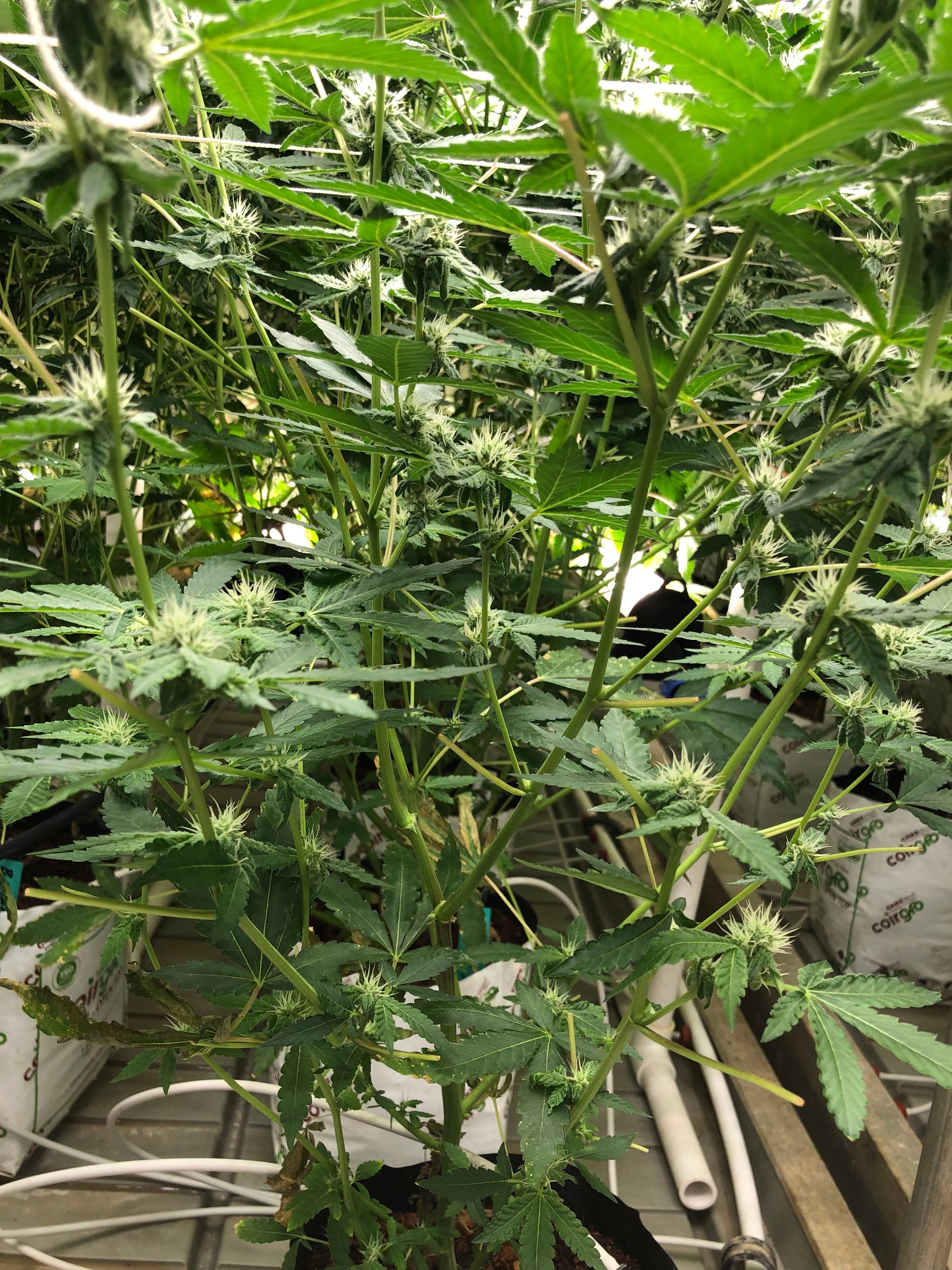

Under canopy lighting ROI depends on more than total yield. At some point, every grower considering under canopy grow lights asks the same question: is it actually worth the investment in real production terms — yield, quality, labor, and consistency?
If you are still exploring the basics, start with What Are Under Canopy Grow Lights?. This article focuses on the real decision: what changes after you install them, and how those changes affect long-term return.
Why Under Canopy Lighting ROI Is Not Just About More Yield
The biggest misconception is that under canopy lighting is only about increasing total yield. While yield can increase, the more important effect is redistribution of production across the plant. In other words, the value comes from improving how much of the plant becomes usable, sellable, and worth harvesting.
Without under canopy lighting:
- Top buds dominate production
- Lower buds remain underdeveloped
- A significant portion of the plant becomes low-grade output
- Room performance depends heavily on top-canopy development
With under canopy lighting:
- Lower buds continue developing
- More of the plant contributes to sellable product
- Grade distribution becomes more balanced
- Harvest value can improve without relying only on raw weight
As a result, under canopy lighting ROI should be measured by harvest quality and usable output, not just by whether the room produced more total biomass.
Usable Yield Drives Under Canopy Lighting Value
Instead of asking “Did total grams increase?”, the better question is:
How much of the plant became top-grade product?
Even if total biomass stays similar, shifting lower canopy material into higher-grade categories can have a direct impact on revenue. This is where usable yield matters more than raw harvest weight. A room that produces more sellable flower from the same plant structure can create better financial performance without depending on a dramatic increase in total mass.
Therefore, growers should evaluate under canopy lighting value by looking at grade distribution, lower bud maturity, flower density, and final product category. If the lower canopy moves from low-value material into a more marketable grade, the investment can start to make sense.
Grade Distribution and Lower Bud Development
Lower-quality buds often require more handling and still end up downgraded. However, when under canopy lighting improves lower bud structure, more of the harvest can move into a better category. That shift can affect revenue, labor, and production predictability at the same time.
For commercial growers, grade distribution usually matters more than a simple before-and-after weight comparison. A small improvement in lower flower quality can be more valuable than a larger amount of weak, airy, or underfinished material.
Why Lower Bud Quality Affects ROI
Lower buds often fall behind because the top canopy blocks most of the usable light. Under canopy lighting helps reduce that gap by sending light upward into the shaded lower zones. As a result, lower flowers may develop better structure, density, and finish.
That does not mean every lower flower becomes equal to the top canopy. Instead, the goal is to reduce the amount of low-grade material and increase the percentage of harvest that qualifies as sellable product.
Labor Savings and Trim Time Affect Under Canopy Lighting ROI
Labor is one of the most overlooked parts of under canopy lighting ROI. Lower-quality buds often require more sorting, more handling, and more trimming time. In addition, inconsistent material can slow down post-harvest workflow and create more decision-making during grading.
When under canopy lighting improves lower bud structure, several labor-related benefits can follow:
- Trim time can decrease
- Sorting can become faster
- Workflow can become more predictable
- Post-harvest grading can become cleaner
- Less material may fall into low-value categories
Because labor costs compound across every harvest, these savings can be as meaningful as yield improvements. For that reason, ROI should include the time and effort required to process the crop, not only the value of the final flower.
Room Consistency Improves Harvest Value
Rooms without under canopy lighting often show strong variation from plant to plant and zone to zone. Some plants finish evenly, while others produce a larger gap between the upper and lower canopy. Over time, that inconsistency can make harvest planning harder.
Common issues include:
- Different plants mature unevenly
- Lower canopy quality varies by position
- Harvest quality changes from batch to batch
- Post-harvest teams spend more time sorting material
By activating the lower canopy, under canopy lighting can reduce variability. This is especially important in facilities running multiple rooms, staggered harvest schedules, or dense production layouts. More consistent harvests make planning easier and can improve the predictability of revenue.
How Under Canopy Lighting Works With Top Lighting
Under canopy lighting is not a replacement for top lighting. It is a supplement. High-performance top fixtures such as Griffin Advanced Grow Light drive canopy-level photosynthesis, while under canopy lighting helps ensure lower zones are not wasted.
Together, they create a more complete light distribution system. The top fixtures support the primary canopy, while the under-canopy layer targets shaded lower plant material. Therefore, the best results usually come from planning both lighting layers as one system.
This also means under canopy grow lights ROI depends on the quality of the full room design. If top lighting, airflow, irrigation, nutrition, and spacing are poorly managed, under canopy lighting alone will not fix the entire production system.
Energy Efficiency and Usable Output Per Watt
From an energy standpoint, under canopy lighting is not about maximizing PPFD everywhere. It is about maximizing usable output per watt. If more of the plant becomes marketable, the effective efficiency of the room can improve even if total wattage increases slightly.
However, growers should still evaluate the added energy cost carefully. The fixture layer needs to produce enough extra harvest value to justify installation, operation, and maintenance. In practical terms, the question is not only “How many watts did we add?” but “How much more usable product did those watts help create?”
Facilities evaluating upgrades may also consider rebate programs or efficiency incentives. A helpful overview is available at Grow Lights Rebate.
When Under Canopy Lighting ROI Makes the Most Sense
Under canopy lighting ROI usually becomes stronger in rooms where lower canopy shading already limits product quality. In those environments, the lighting layer solves a clear production problem rather than adding equipment for no reason.
Under canopy lighting typically delivers the most value when:
- Plants have dense upper foliage
- Lower buds are visibly underdeveloped
- Rooms use high-output top LEDs
- Bench spacing or rack layouts create deeper shadow zones
- Labor costs are significant
- Grade distribution strongly affects revenue
In these cases, the added light may improve lower bud development, trim efficiency, and overall harvest value. As a result, the investment becomes easier to justify.
When Under Canopy Lighting May Matter Less
In lower-density grows or environments where light penetration is already sufficient, the impact may be smaller. For example, if plants are widely spaced and lower sites already receive enough usable light, the return may not be as dramatic.
However, many modern indoor facilities operate at densities where lower canopy shading is unavoidable. In those rooms, under canopy lighting can address a real production gap. The key is to evaluate the room honestly before assuming the system will or will not pay off.
What “Worth It” Actually Means
Under canopy lighting is worth it when the combined effect of improved grade distribution, reduced labor time, better consistency, and stronger usable yield outweighs the additional cost of installation and energy.
The answer is rarely found in a single metric. Instead, it comes from looking at how the entire room performs over multiple harvest cycles. A system that improves lower bud quality, reduces low-grade material, and makes harvest workflow more predictable may deliver value even if total yield gains look modest on paper.
For that reason, growers should measure under canopy lighting ROI through a full production lens, including:
- Usable yield
- Grade distribution
- Labor savings
- Harvest consistency
- Energy cost
- Installation cost
- Long-term room performance
Final Takeaway on Under Canopy Lighting ROI
Under canopy lighting ROI comes from improving how efficiently the plant converts light into sellable product. It does not simply increase output; it can improve how much of the lower canopy becomes worth harvesting.
When evaluated correctly, the question is not “Does it add more light?” but “Does it make more of the plant valuable?” In many dense indoor environments, the answer can be yes. However, the strongest return comes when under canopy lighting works with strong top lighting, good airflow, clean irrigation strategy, and consistent crop management.
```