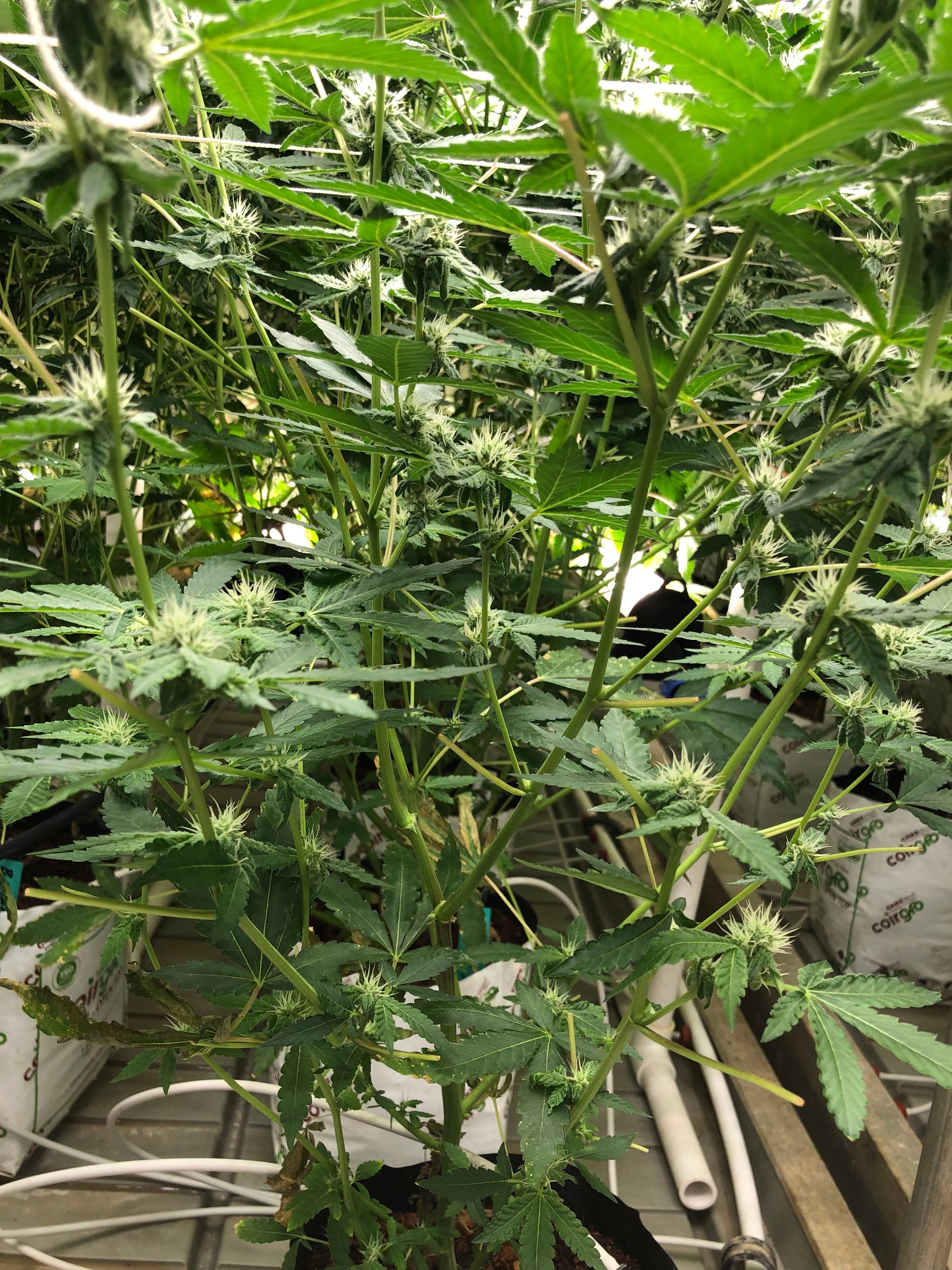

Multi-layer grow lighting is becoming more important as indoor cultivation becomes denser, more controlled, and more performance-driven. As facilities push for higher output per square foot, one limitation continues to appear: light distribution inside the plant canopy.
Traditional top lighting systems remain essential, but they are no longer sufficient on their own in every dense production room. As canopy density increases, lower plant zones receive less usable light. This is where under canopy grow lighting is shifting from an optional upgrade to a core component of modern lighting design.
Why Multi-Layer Grow Lighting Is Becoming Standard
Multi-layer grow lighting solves a simple problem: plants do not receive light evenly from top to bottom. Top fixtures drive the main canopy, while under canopy fixtures help activate shaded lower zones. Together, they create a more complete lighting strategy for dense indoor cultivation.
Instead of forcing all photons through thick upper foliage, growers can now approach the plant from more than one direction. As a result, modern lighting design is moving away from one-layer thinking and toward a better distributed system.
Why Top-Down Lighting Alone Is Reaching Its Limit
Top lighting works best when light can travel directly to the plant surface. However, dense foliage blocks and absorbs a large portion of downward photons before they reach lower levels.
This creates a consistent pattern:
- Upper canopy performs at high efficiency
- Mid canopy receives partial light
- Lower canopy becomes underutilized
Even with high-output fixtures, the geometry of plant structure limits how effectively light can penetrate. This is not only a fixture problem. It is a distribution problem.
For a breakdown of how under canopy lighting addresses this issue, see Why Uplighting From Below Works.
Under Canopy Lighting Systems Add the Second Layer
Instead of relying on a single lighting layer, modern cultivation is moving toward a multi-layer approach. Top lighting and under canopy lighting do different jobs, but they support the same goal: better usable light throughout the plant structure.
- Top lighting: drives primary canopy-level photosynthesis.
- Under canopy lighting: activates shaded lower zones.
- Multi-layer grow lighting: combines both layers into a more complete light distribution system.
Rather than forcing light through dense foliage, growers are designing systems that approach the plant from multiple directions. Therefore, under canopy lighting becomes less of an add-on and more of a second layer in the overall room design.
High-Density Grow Rooms Need Better Light Distribution
Dense indoor cultivation increases the need for better light distribution. When plants are packed closer together, upper leaves and top flowers intercept more light. Meanwhile, lower zones receive less usable intensity and often become less productive.
Multi-layer grow lighting helps reduce that imbalance. By combining top-down and bottom-up light, growers can support more of the plant instead of relying only on the upper canopy.
This matters because production value is not only about total brightness. It is about how much usable light reaches the right plant zones at the right stage.
Why Under Canopy Lighting Is Becoming Standard
Under canopy lighting is gaining adoption not because it is new, but because it solves repeatable production issues. In dense rooms, lower bud sites often fall behind, quality becomes uneven, and harvest value can concentrate too heavily in the upper canopy.
Under canopy lighting helps growers address several common problems:
- Improves lower bud development
- Increases usable yield across more of the plant
- Reduces variability within and between harvests
- Supports more balanced grade distribution
- Improves the value of lower canopy material
As discussed in Is Under Canopy Lighting Worth It?, the value is not just higher output. The larger benefit is better quality distribution across the plant.
Rolling Benches and Multi-Tier Racks Increase the Need
The shift toward rolling benches and multi-tier racks is accelerating the need for multi-layer grow lighting. These systems increase production density, but they also increase shading and make lower canopy planning more important.
- Plants are packed closer together
- Light penetration becomes more limited
- Lower canopy shading increases
- Room layouts become more dependent on uniform light distribution
These systems amplify the limitations of top-down lighting. As a result, under canopy lighting becomes less of an option and more of a practical requirement in high-density rooms.
For layout considerations, see Designing Under Canopy Lighting for Rolling Benches and Multi-Tier Racks.
Advanced Growers Are Designing Layered Lighting Strategies
Leading facilities are no longer treating lighting as a single system. Instead, they are building layered strategies that account for plant structure, growth stage, fixture placement, and lower canopy response.
Advanced lighting strategies often include:
- Adjusting under canopy intensity independently
- Running lighting schedules based on plant stage
- Balancing top and bottom light for uniform development
- Measuring lower canopy PPFD, not only canopy-level PPFD
- Matching under canopy light output with airflow and irrigation strategy
Measurement and optimization are also evolving. Instead of focusing only on canopy-level PPFD, growers are evaluating how light is distributed throughout the plant. For measurement strategy, see How to Measure Lower Canopy PPFD.
What Multi-Layer Grow Lighting Means for New Installations
If you are designing or upgrading an indoor cultivation room today, lighting decisions should reflect how plants actually grow, not just how fixtures are traditionally installed. Multi-layer grow lighting gives growers a more realistic way to plan around dense canopy structure.
Top lighting systems such as Griffin Advanced Grow Light remain the foundation. However, without addressing lower canopy performance, part of the plant’s production potential remains unused.
Under canopy lighting closes that gap. More importantly, it helps the entire lighting system work as a coordinated design rather than a single overhead layer.
Energy Efficiency and Usable Output Per Watt
Modern facilities are focusing more on output per watt rather than total wattage. When more of the plant produces usable product, overall system efficiency improves, even if the room uses an additional lighting layer.
The goal is not to add watts blindly. Instead, the goal is to direct usable light into zones where it can increase harvest value. This makes multi-layer grow lighting especially relevant for facilities trying to improve both productivity and efficiency.
This shift also aligns with broader energy optimization strategies, including rebate and incentive programs. For more information, see Grow Lights Rebate.
Final Takeaway on Multi-Layer Grow Lighting
Multi-layer grow lighting is not simply a trend. It represents a shift in how light is delivered to the plant. As indoor cultivation continues to move toward higher density and higher efficiency, top lighting alone may leave too much lower canopy potential unused.
Under canopy lighting adds the second layer that dense rooms increasingly need. It improves light distribution, supports lower canopy performance, and helps growers build a more complete production system.