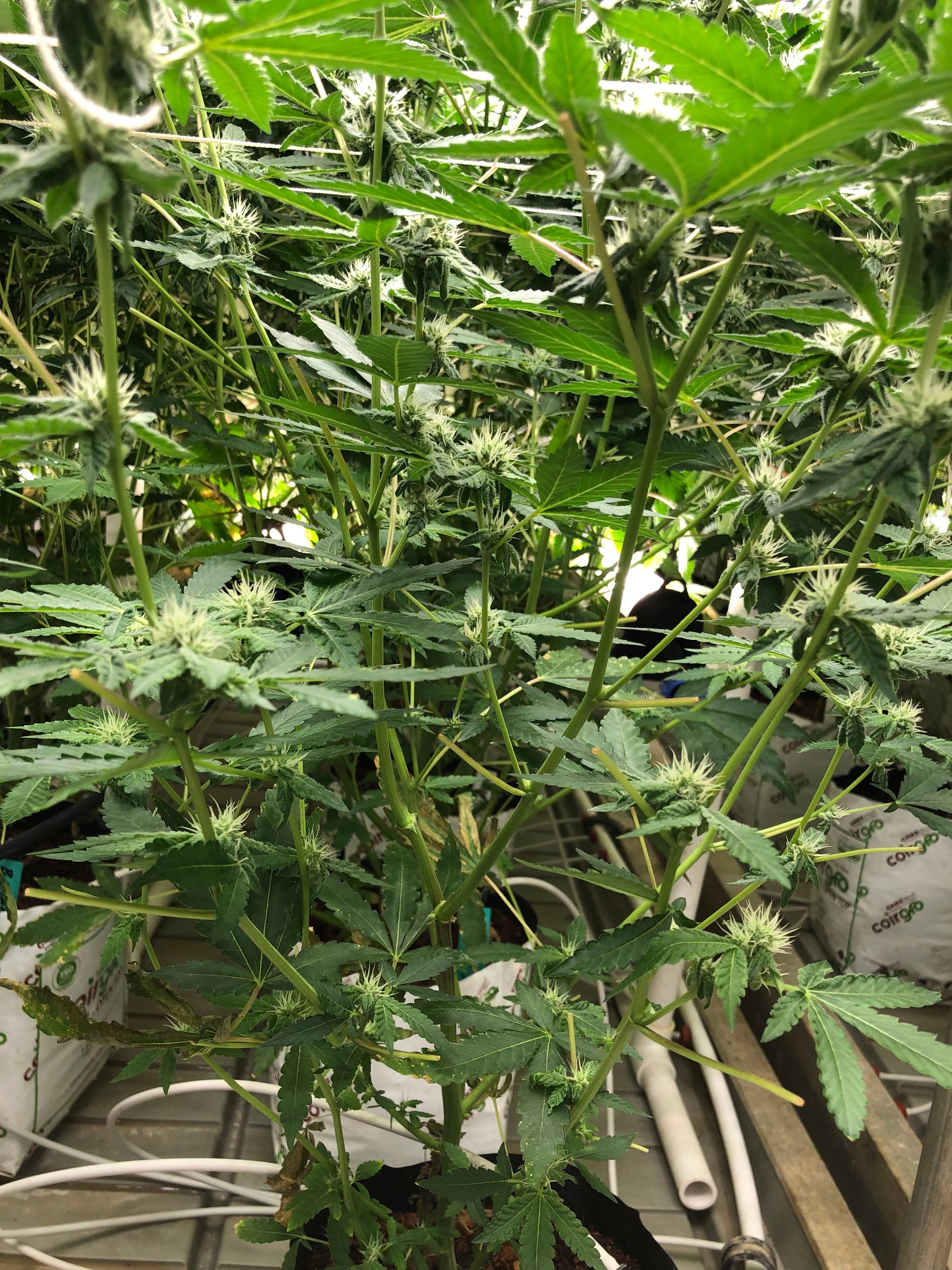

Under canopy lighting intensity is one of the first questions growers ask after they understand what under canopy grow lights are and why uplighting from below works. The next step is simple: how much lower-zone light do you actually need, how should you handle under canopy light spacing, and how can you adjust the layout with real crop feedback?
Once you understand what under canopy grow lights are and why uplighting from below works, the layout becomes easier to plan. This article keeps the answer practical, so you can design a useful lower canopy setup without relying on complicated formulas.
Start With the Job of Under Canopy Lighting
Under canopy LEDs are supplemental. They are not there to compete with your top lights or turn the bottom of the room into a second sun. Instead, their job is to support shaded lower plant zones that overhead fixtures cannot reach consistently.
The main goals are:
- Keep shaded lower leaves more active
- Support lower bud sites through the finish
- Reduce the quality gap between the top and bottom of the plant
- Improve usable output without adding unnecessary overhead wattage
Therefore, when you think about intensity and spacing, always come back to this idea: under canopy lighting is about raising the floor, not trying to match the ceiling.
Under Canopy Lighting Intensity: What Is Enough?
Under canopy lighting intensity should be strong enough to make the lower canopy useful, but not so strong that it creates heat, stress, or uneven dry spots near the base of the plant.
Instead of chasing perfect numbers, it helps to define “enough” in practical terms. In most indoor canopies, the top receives strong light from the main fixtures. The middle zone may receive acceptable light if the room is well designed. However, the lower third is where productivity often starts to fall off.
Your goal is to take that lower third from “barely contributing” to “reliably productive.” As a result, the lower light should be clearly noticeable at leaf level, but it should still feel like a controlled support layer.
Simple Intensity Ranges Without Overthinking PPFD
Every facility, cultivar, and lighting stack is different, so there is no single magic PPFD number. However, you can still think in simple zones.
- Too weak: lower leaves still look flat and shaded, and the plant barely changes when the under canopy lights are turned on.
- Reasonable supplemental light: the lower canopy brightens, leaf undersides show a soft glow, and temperatures stay manageable.
- Too aggressive: lower leaves curl, the media near the stem dries faster, or the lower zone feels too warm.
If you have a PAR meter, under canopy lighting intensity should usually stay well below top-canopy levels. For example, the top canopy may run much higher while the lower canopy receives a smaller supplemental lift. Still, the exact number matters less than the plant response over a full cycle.
Under Canopy Light Spacing for Bars, Benches, and Racks
Under canopy light spacing is where many layouts fail. You do not want a few bright “light pipes” shooting between plants. Instead, you want a smooth, connected glow under the canopy.
A few simple spacing rules help:
- Follow the plant structure, not just the floor. On rolling benches or tables, align under canopy bars under plant rows rather than aisle gaps.
- Keep gaps small enough that light overlaps. If you see dark strips between bars, the spacing is likely too wide.
- Match bar length to bench length. Short, scattered fixtures create uneven coverage, while longer continuous runs improve uniformity.
For a quick look at practical fixture lengths, review the under canopy grow light collection. This can help you visualize how many bars are needed per bench, row, or rack level.
How to Check Lower Canopy Coverage Without a Meter
Even without instruments, you can check whether the layout is close. First, turn the under canopy LEDs on while keeping the top lights at a consistent level. Then look inside the lower canopy instead of only looking at the floor.
Use these simple checks:
- Shadow check: look at leaf undersides and lower stems. You should see a soft fill of light, not deep black shadows.
- Distance check: step several feet back and look for dark channels between bars. If your eyes see striping, the plants are likely feeling it too.
- Heat check: stand near plant height and feel the lower canopy. It should feel gently warmed, not harsh or uncomfortable.
If one area looks much darker or hotter than the rest, adjust spacing or dimming before assuming the whole room needs more power.
Using PPFD Maps for Under Canopy Lighting Intensity
If you have access to a PAR or PPFD meter, you can be more structured without turning the project into a science experiment. The goal is not to create a perfect flat heatmap. Instead, the goal is to confirm that the lower canopy receives a useful and consistent lift.
Focus on:
- Mapping a small grid at lower canopy height
- Comparing readings with under canopy lights off and on
- Checking that the highest and lowest points are not wildly different
- Measuring near actual plant sites, not only open floor space
Because under canopy lighting intensity works with plant shape, a meter should support your judgment, not replace it. The real test will still be lower bud development, grade-out, and harvest quality.
Run an A/B Test Before Scaling the Layout
Because every facility has its own mix of top fixtures, genetics, airflow, and irrigation, a small A/B test is often the best way to answer “how much is enough?”
- Pick one bench, table, or rack level as your test zone.
- Install under canopy lighting with reasonable intensity and spacing.
- Leave a similar bench or level without under canopy lighting, or run it at reduced intensity.
- Keep all other variables as consistent as possible.
At harvest, compare:
- Top vs lower bud quality and size
- Total usable yield, not just wet weight
- Trim time and low-grade material
- Lower canopy consistency across the test area
If the under canopy zone delivers better lower development without new problems, you can scale that pattern with more confidence.
Energy, Dimming, and Scheduling Strategy
Intensity is not only about how bright the bars are. It is also about how long they run. Therefore, dimming and scheduling should be part of the same plan.
Practical options include:
- Stage-based: use under canopy lighting mainly in mid-to-late flower, when shading is strongest.
- Time-based: run under canopy bars during the most useful hours instead of all day.
- Dimming-based: pair under canopy output with top light dimming so the room stays balanced.
If you are working within a utility rebate or energy-efficiency plan, frame under canopy lighting as a tool that helps improve marketable yield per kWh. For broader rebate context, review the Grow Lights Rebate – Utility Energy Rebates Guide.
You can also look at how high-efficiency top fixtures work with under canopy systems. For example, the Griffin Advanced Grow Light provides strong overhead coverage while under canopy LEDs handle shaded zones below.
Final Takeaway on Under Canopy Lighting Intensity
Under canopy lighting intensity does not need to be complicated. Start with a clear goal: support the shaded lower third of the canopy. Then set intensity and spacing to match that job.
Aim for a smooth, gentle glow from below, not harsh spotlights. Use your eyes, a heat check, a small PPFD map if available, and an A/B test to refine the layout over a cycle or two.
As you tune your setup, keep the decision loop simple. Review the basics in What Are Under Canopy Grow Lights? and Why Uplighting From Below Works. Then let your plants, spacing pattern, and harvest numbers tell you when you have reached “enough.”
When under canopy lighting intensity and under canopy light spacing work together, the lower canopy becomes more than a weak zone. It becomes a useful part of the plant that can support better harvest value.
```