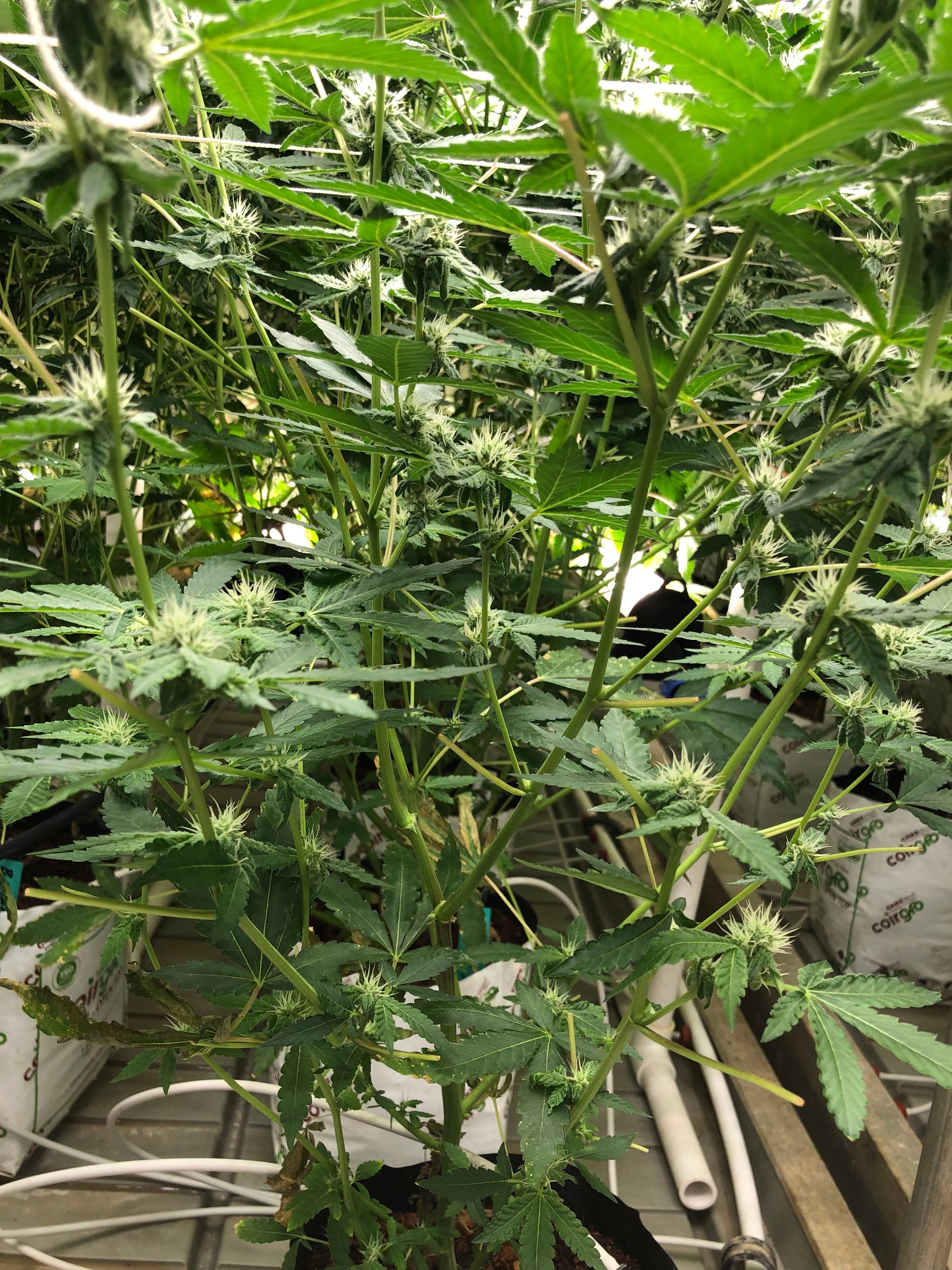

Under canopy lighting PPFD measurement is different from top-light measurement because under canopy grow lights send light upward into angled leaves, lower bud sites, and shaded foliage. As soon as growers install under canopy grow lights, the next question appears: “What PPFD should I be getting?” The problem is not the meter — it is where and how the measurement is taken.
Most lighting measurement habits come from top lighting systems. However, under canopy lighting works in a completely different geometry. If you measure it the same way you measure overhead fixtures, you will almost always misinterpret the data.
If you are new to the concept, begin with What Are Under Canopy Grow Lights? and Why Uplighting From Below Works. This article focuses specifically on measurement — not theory.
Why Under Canopy Lighting PPFD Measurement Is Different
Top lighting measures photons traveling downward onto a horizontal leaf surface. Under canopy lighting measures photons traveling upward into angled and overlapping leaves. Because of this, a standard “table height” measurement does not reflect what the plant actually receives.
Three things make lower canopy measurement unique:
- Leaves are angled and layered
- Light reflects multiple times inside foliage
- The plant receives light on the underside of leaves
This means PPFD readings will naturally look inconsistent if measured incorrectly — even when the lighting system is working properly.
The Most Common Under Canopy Light Measurement Mistake
The most common mistake is placing a PAR meter flat on the floor or bench and pointing it upward. That approach measures fixture output, not plant reception.
A grower will often see very high readings directly above a bar and very low readings between bars, then assume spacing is wrong. In reality, the plant canopy integrates light from multiple angles. The meter on the floor does not.
That is why under canopy lighting PPFD measurement should happen inside the lower foliage zone, not on an empty floor or bench surface.
Correct Sensor Position for Lower Canopy PPFD
To measure under canopy lighting correctly, measure where the plant actually uses the light: inside the lower foliage zone.
Use this method:
- Turn on both top lighting and under canopy lighting.
- Place the sensor at lower bud height, not at the floor.
- Angle the sensor slightly toward the plant, not directly upward.
- Take multiple readings around a single plant.
- Repeat the process across several representative plants.
You are measuring the environment the bud experiences — not the output of the diode. This is the key difference between fixture testing and real under canopy light measurement.
Why a Single PPFD Number Can Be Misleading
Growers often want one target number. However, under canopy lighting is not meant to create a second top canopy. Its job is supplemental activation of shaded plant tissue.
Instead of chasing one value, look for patterns:
- Does the lower canopy show visible illumination?
- Are lower leaves staying more active?
- Are lower buds developing instead of stalling?
- Does the lower material improve by harvest?
The plant itself is a better sensor than a meter when interpreting supplemental lighting. A PAR meter helps you understand light presence, but the crop tells you whether the strategy is working.
How to Build a Lower Canopy PPFD Map
If you create a light map, do not map the entire room like a top-lighting layout. Instead, map a representative section that includes actual plants, real spacing, and normal fixture positions.
Measure these locations:
- Near a bar
- Between bars
- Inside a plant
- Near the stem
- At lower bud height
You are looking for usable light presence, not perfect uniformity. Under canopy lighting PPFD measurement should show whether useful light reaches the lower plant zone, not whether every inch of the floor receives the same number.
What Growers Should Watch Beyond PPFD
PPFD matters, but it should not be the only measurement. Under canopy lighting rarely proves its value from a single day of readings. It shows its value over a full crop cycle.
Watch these outcomes:
- Lower bud size
- Lower bud density
- Grade distribution
- Trim time
- Uniformity across the plant
- Reduction in weak lower material
If the lower canopy looks brighter but harvest quality does not improve, the issue may not be PPFD alone. Nutrition, airflow, irrigation, spacing, and overall room balance can all affect the final result.
How Under Canopy PPFD Works With Top Lighting
Under canopy lighting performs best when paired with strong overhead fixtures such as Griffin Advanced Grow Light. Top lights drive the main canopy, while under canopy lighting activates shaded lower zones.
Because both lighting layers work together, measurements should not isolate under canopy bars in an unrealistic way. In production, the plant receives light from the top and bottom at the same time. Therefore, PPFD readings should reflect the real lighting environment whenever possible.
Energy and Efficiency Considerations
Facilities evaluating upgrades often compare yield per kWh rather than absolute PPFD numbers. Supplemental lighting that improves usable yield may qualify for efficiency planning or incentives. For guidance, see Grow Lights Rebate.
The goal is not to chase the highest possible lower-zone reading. Instead, the goal is to use enough light to improve lower bud development, grade distribution, and harvest value without wasting power.
Final Takeaway on Under Canopy Lighting PPFD Measurement
Under canopy lighting PPFD measurement is not the same as top-light measurement because the plant does not receive the light the same way. Measure inside the plant, not on the floor. Look for biological response, not just numbers.
When measurement matches plant behavior, PPFD becomes a useful tool instead of a confusing one. The best readings are the ones that help growers understand whether lower canopy light is actually improving plant performance, harvest quality, and usable yield.
```