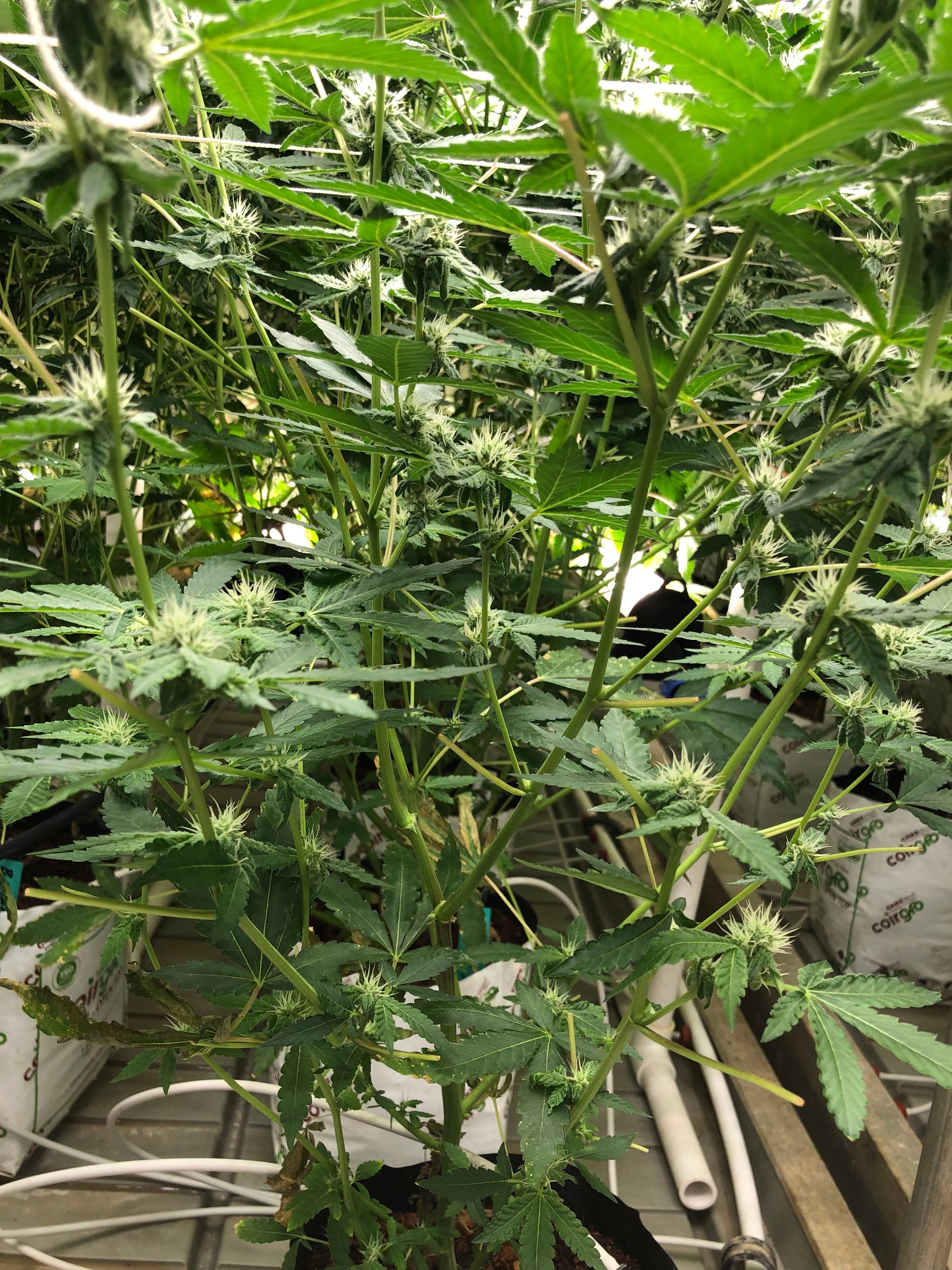

Lower canopy yield improves when under canopy grow lights send usable light upward into shaded lower zones where lower bud sites often fall behind. The goal is not simply to add more light or force every lower flower to become oversized. Instead, the real value comes from helping more of the plant develop into usable, well-finished, marketable product.
In dense indoor rooms, the top canopy receives most of the usable light. As a result, lower bud sites often sit in shade, develop slowly, and fall behind in size, density, color, and finish. Under canopy lighting helps solve that problem by sending light upward into the shaded lower canopy. However, lighting alone is not the whole answer. Nutrition, irrigation, airflow, root-zone balance, bench layout, and total growing system design all affect whether that extra light becomes real yield.
If you are new to the topic, start with What Are Under Canopy Grow Lights? and Why Uplighting From Below Works. This article explains the yield mechanism from a more technical growing perspective.
How Under Canopy Lighting Improves Lower Canopy Yield
Yield improvement does not come from brightness alone. It comes from giving more productive plant tissue access to usable light at the right stage, in the right zone, and with the right supporting environment. Therefore, growers should think about yield as a system result, not just a light-output number.
Usable Yield Matters More Than Raw Biomass
Raw biomass is not the same as usable yield. A plant can produce more total material without producing more top-grade flower. For commercial growers, the better question is not only “Did the plant get heavier?” The better question is:
How much of the harvest became sellable, well-finished, higher-grade product?
Under canopy grow lights can help by improving lower flower development. Instead of leaving lower sites weak or underfinished, uplighting gives those sites a better chance to mature into usable product. In practical terms, the goal is better grade-out, not just more plant mass.
Why Lower Bud Development Often Falls Behind
Lower bud development usually falls behind because upper leaves and top flowers intercept most of the overhead light. Even powerful top fixtures cannot fully overcome plant geometry once the canopy closes. Consequently, shaded lower sites often receive less usable energy during the most important finishing stages.
This creates a familiar harvest pattern:
- Strong top flowers
- Acceptable middle flowers
- Weak, airy, or underdeveloped lower flowers
Under canopy lighting targets this weak zone directly. It does not replace top lighting; instead, it helps recover production potential that would otherwise be lost in the lower canopy.
Under Canopy Uplighting and Lower Bud Development
Under canopy grow lights improve yield potential by changing the direction of usable light. Instead of relying only on photons traveling from the top down, they send light upward into shaded areas. This matters because the lower canopy has a different light-access problem than the top canopy.
Bottom-Up Light Reaches Shaded Lower Canopy Zones
The lower canopy is difficult to reach with top lighting because leaves overlap, branches shade each other, and flower clusters block light from traveling deeper into the plant. Under canopy uplighting solves a different geometry problem: it delivers light from below, where top-down photons are weakest.
That makes under canopy lighting especially useful in:
- Dense flowering rooms
- Rolling bench systems
- Multi-tier rack rooms
- High-output top-light environments
More Active Lower Sites Support Lower Canopy Yield
When lower leaves receive too little light, their contribution to plant growth drops. Under canopy lighting can keep more of the lower plant structure active for longer. As a result, lower bud development can improve, and the gap between top and bottom quality can become less extreme.
Better Light Distribution Improves Grade-Out
The biggest yield benefit often appears in grade distribution. More lower buds can move from low-grade material into a more valuable category. For that reason, under canopy lighting should be evaluated by harvest quality, not just by room brightness.
Yield Quality Is Not Just Bigger Flowers
A common mistake is assuming that yield improvement means making every flower as large as possible. That is not the right goal. Oversized, uneven, or poorly finished flowers are not automatically better. Instead, the target should be better maturity, density, surface area, and finish across more of the plant.
Appropriate Flower Size Matters More Than Oversizing
The goal is appropriate size, density, and maturity across more of the plant. Under canopy lighting should help lower flowers finish better, not push unnatural or unbalanced growth. In other words, a strong crop is not judged only by the largest top flowers. It is judged by how consistently the plant produces desirable flower from top to bottom.
Surface Area, Color, and Frost Matter
Good yield is also a quality issue. Growers often care about flower surface area, color expression, resin development, and frosty appearance. Under canopy lighting can support these outcomes by helping lower sites stay active and better exposed during the finishing window.
This is where “more light” needs to be understood carefully. The goal is not simply bulk. Rather, the goal is more finished, attractive, resin-rich, marketable flower across the plant.
Quality-Driven Yield Is More Valuable
A smaller amount of higher-grade flower can be more valuable than a larger amount of weak, underfinished material. Therefore, under canopy lighting is most useful when it improves the quality of the harvest, not only the weight.
Nutrition and Irrigation Support Lower Canopy Yield
Under canopy lighting can increase photosynthetic activity in lower plant zones. However, if the plant becomes more active, its support requirements also increase. Light creates opportunity; nutrition and root-zone management help convert that opportunity into real growth.
Nutrition Supports Under Canopy Lighting Yield
When more plant tissue receives usable light, the crop may require better support from nutrition, fertigation, and environmental control. If nutrients do not keep up, the added light may not translate into better lower flower development.
This is why under canopy lighting should be treated as part of a complete cultivation system, not a standalone fix. Grow Pros Solutions approaches indoor cultivation through a broader ecosystem that includes environmental control, fertigation, nutrients, and system support: Grow Pros Solutions Eco System.
Light Without Nutrition Can Underperform
If a grower adds under canopy lighting but does not adjust nutrition, irrigation, or environmental strategy, the crop may not fully respond. The plant has more light available, but it may not have the nutrient supply or root-zone stability needed to turn that energy into flower development.
Irrigation and Root-Zone Balance Matter Too
More active plant tissue can change water demand. In dense rooms, this can affect substrate moisture, EC, and root-zone balance. If irrigation is too light, too heavy, or inconsistent, the lower canopy may still underperform.
The best results come when lighting, nutrition, irrigation, and root-zone conditions are tuned together. Under canopy lighting creates the potential for better yield; crop management determines how much of that potential becomes real.
Whole-System Design for Under Canopy Lighting Yield
Under canopy lighting is one part of a larger production system. Facility layout, bench structure, airflow, spacing, and maintenance access all affect how well the crop can use the added light. Because of that, growers should evaluate the room as a complete system rather than judging the fixtures alone.
Rolling Benches and Racks Increase Productive Surface Area
Rolling benches and rack systems can increase productive canopy area by improving space efficiency. More canopy surface area gives the facility more production potential, but it also increases the need for better light distribution.
Under canopy lighting pairs naturally with rolling bench and rack systems because dense layouts often create deeper lower-canopy shade. For bench and rack systems, see: Grow Rolling Bench.
Airflow and Microclimate Still Matter
Lower canopy zones can trap humidity and reduce air exchange. Even if light improves, poor airflow can limit crop response. Dense flower zones need usable light, but they also need a stable microclimate.
This is especially important when plants are packed tightly or when benches reduce natural air movement below the canopy. Therefore, airflow should be part of the same planning conversation as lighting.
Top Lighting Still Does the Heavy Lifting
Under canopy lighting works best when paired with strong top lighting. The top fixtures drive primary canopy performance, while under canopy lights help recover lower-zone productivity.
For practical under canopy product options, review the Under Canopy Grow Light Collection.
How to Measure Lower Canopy Yield Improvements
The only way to know whether under canopy grow lights improve yield in a specific room is to measure outcomes over a full crop cycle. Do not judge only by how bright the room looks. Instead, compare quality, weight, grade distribution, and lower-zone performance.
Track Usable Yield, Not Just Wet Weight
Wet weight can be misleading. Track dry weight, grade distribution, and how much material enters your preferred product category. Under canopy lighting should improve the usable portion of the harvest, not only total bulk.
Compare Top, Middle, and Lower Flower Quality
Separate or visually compare flower quality by plant zone. Look at top, middle, and lower material. The goal is to reduce the quality gap, not erase all natural differences.
Important indicators include:
- Lower flower density
- Color expression
- Trichome coverage
- Flower size consistency
- Reduction in low-grade material
Run a Small A/B Test Before Scaling
Before installing under canopy lights across an entire facility, test one bench, row, or room section. Keep genetics, nutrition, irrigation, and top lighting as consistent as possible. Then compare the treated zone against a similar untreated zone.
This gives you a clearer picture of whether the added light improves real yield, quality, and labor efficiency. Additionally, a small test helps you adjust spacing, schedule, and management before committing to a full-room rollout.
Energy and ROI for Lower Canopy Yield
Under canopy lighting adds energy use, so the return must come from better harvest value. The strongest case appears when the system improves usable yield, reduces low-grade material, and supports more consistent production.
Facilities evaluating lighting upgrades should also review energy rebate and incentive opportunities. For rebate planning, visit: Grow Lights Rebate.
Final Takeaway on Lower Canopy Yield
Lower canopy yield improves when growers treat under canopy lighting as part of the whole production system. These fixtures send usable light upward into shaded zones, support better lower bud development, and can improve grade distribution across the plant.
However, under canopy lighting is not magic, and bigger is not always better. The real goal is appropriate flower size, stronger surface area, better color, improved resin expression, and more marketable product. To get those results, nutrition, irrigation, airflow, root-zone balance, rolling bench layout, and overall ecosystem support must keep up with the added light.
When under canopy lighting is integrated into the whole growing system, it does more than brighten the bottom of the plant. Ultimately, it helps turn more of the canopy into finished, valuable yield.